Innerspring mattresses use interconnected or individually wrapped steel coils to provide responsive support and a gently buoyant feel. Their internal structure can promote airflow through the mattress, helping regulate temperature during sleep. Coil design, firmness, and comfort layers affect how an innerspring mattress feels and how well it suits different sleeping positions.
Coil count alone does not determine comfort or durability; wire gauge, coil shape, and construction also matter. A mattress may combine springs with cotton, wool, foam, or latex to adjust cushioning and pressure relief. Understanding these materials can help distinguish traditional innerspring designs from hybrid and organic mattresses.
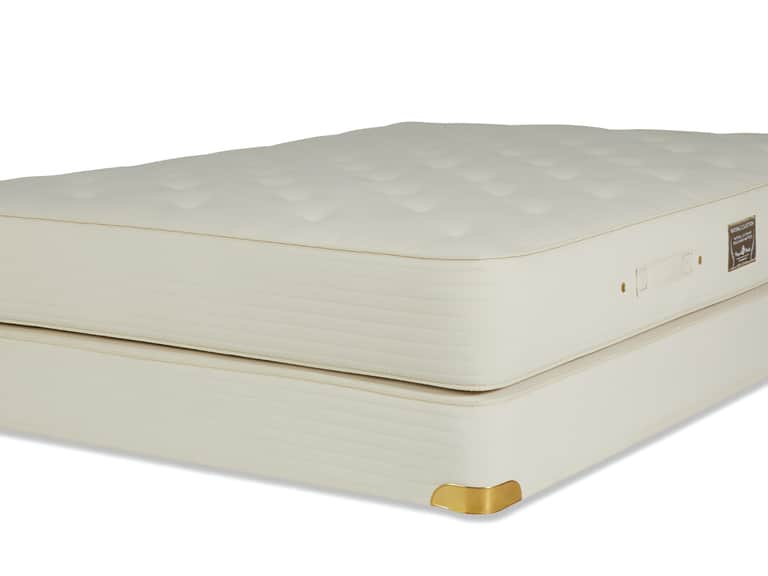
The Royal-Pedic Natural Cotton Mattress with Wool Wrap combines an innerspring support system with natural cotton and a wool wrap. Cotton provides a familiar, breathable comfort layer, while wool adds cushioning and can help moderate moisture and temperature. These materials influence surface feel without replacing the supportive function of the coils.
Innerspring mattresses are commonly considered by sleepers who prefer responsive support, easier movement across the surface, or a less enveloping feel than some all-foam designs. Firmness and pressure distribution vary by model and body type. Comparing mattress construction with sleeping position can clarify whether a particular coil and padding combination is appropriate.
A complete sleep setup also depends on compatible bedding, including pillows and sheets suited to mattress dimensions and personal comfort preferences. Natural-fiber materials such as cotton and wool may appeal to those evaluating organic mattresses, while latex can provide a distinct resilient feel in certain comfort layers. Care instructions and foundation compatibility are also relevant.
 Innerspring Mattresses
